Zero‑Width vs Binary Encryption: Which Should You Use?
Posted on January 15, 2026 | Updated April 8, 2026
Encryption
Decision Guide
Flowchart
Quick answer: Use zero-width encryption when you want the carrier text to look normal. Use binary encryption when you want a robust copy-paste format and do not mind obvious ciphertext.
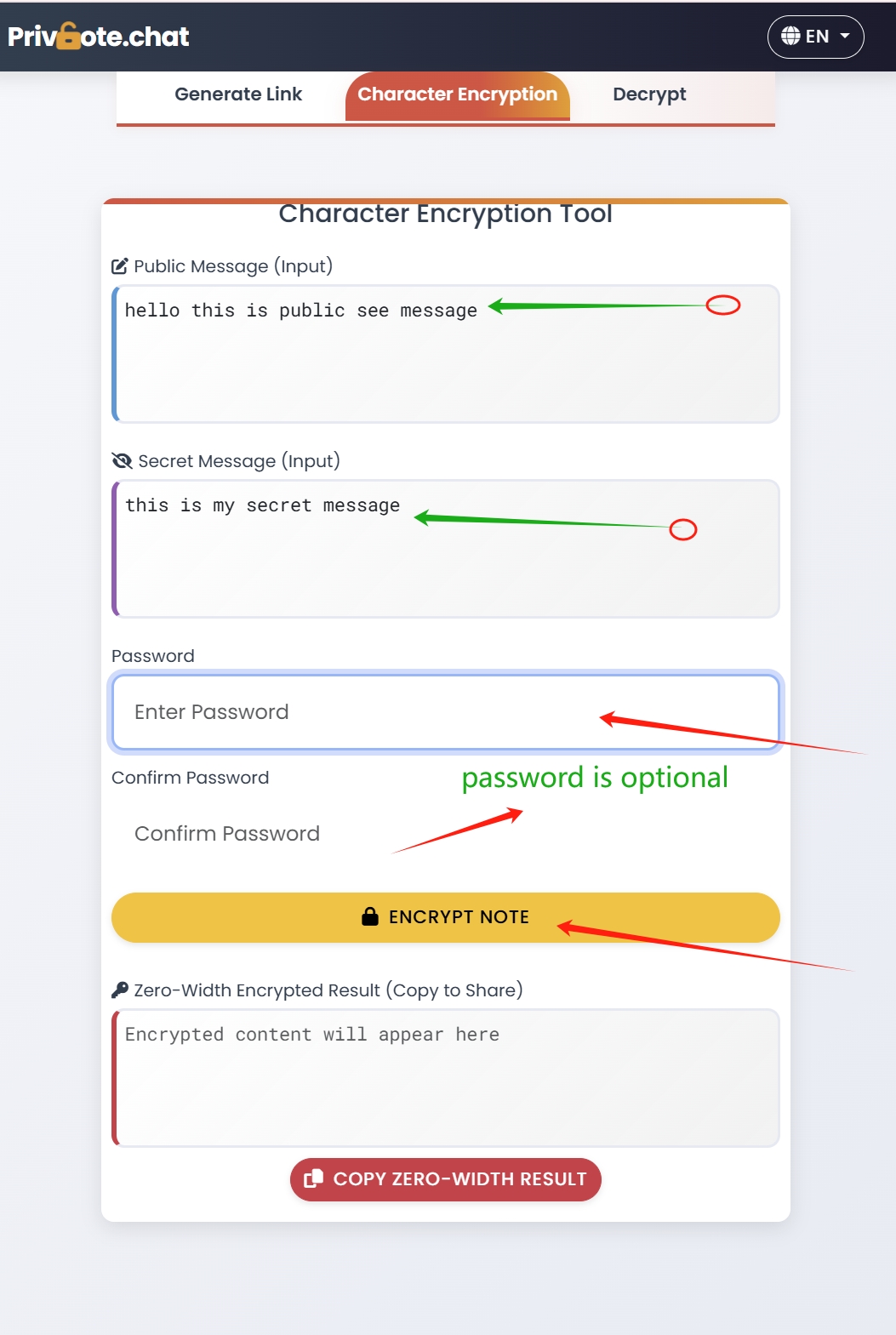
Both options protect your message, but they’re good at different things:
- Zero‑width: hides the existence of the secret inside normal text (steganography).
- Binary (0/1): produces obvious ciphertext, but is very copy‑paste friendly and deterministic.
Decision flowchart
flowchart TD
A[What do you care about most?] --> B{Need the message to look normal?}
B -- Yes --> C[Choose Zero‑Width]
C --> C1[Good for: hiding in plain sight]
C --> C2[Note: some apps may strip zero‑width chars]
B -- No --> D{Need maximum robustness for copy/paste?}
D -- Yes --> E[Choose Binary (0/1)]
E --> E1[Good for: deterministic transfer]
E --> E2[Looks like ciphertext]
D -- No --> F[Either works; prefer Zero‑Width + a password]
Compatibility tip: If you see decryption failures with zero‑width, try sending through a “plain text” channel, or switch to binary encryption.